
Phone
13805130875


WeChat Channel
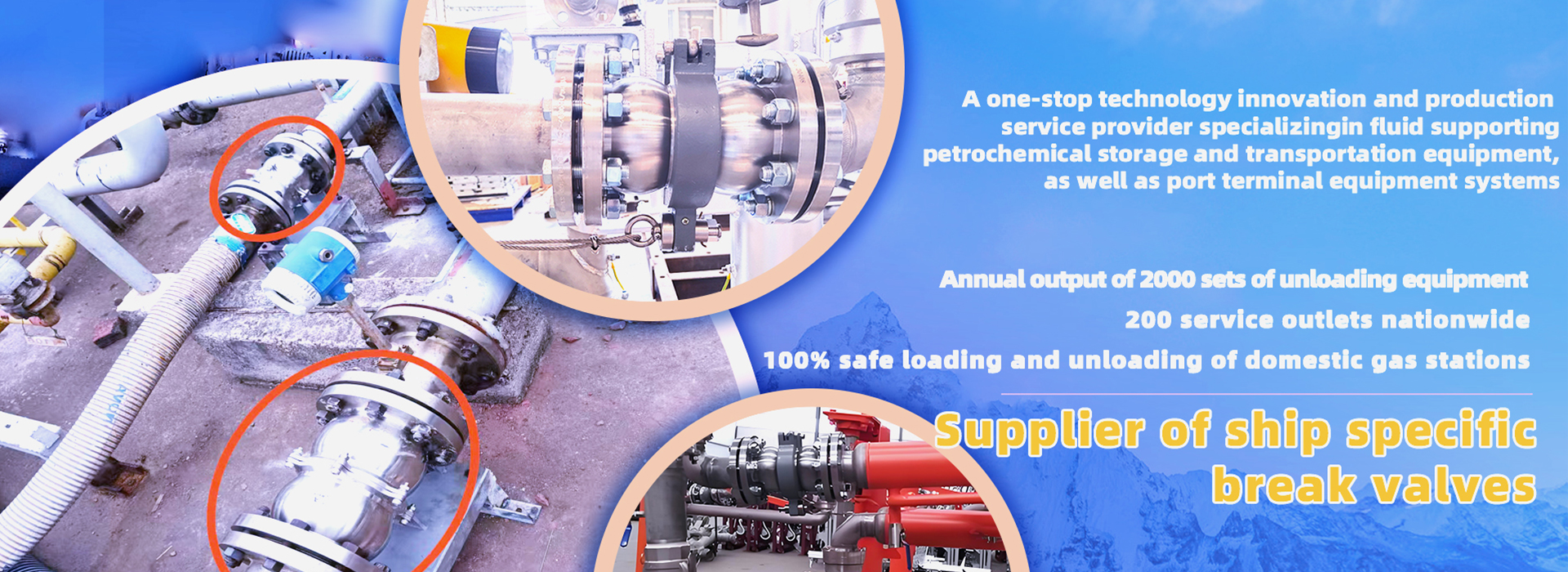
Brief Overview of Cryogenic Liquid Nitrogen Breakaway Valves
(Content Translation)
Cryogenic Liquid Nitrogen Breakaway Valves (also known as Emergency Release Couplings for LN?) are specialized safety devices designed for ultra-low-temperature applications involving liquid nitrogen (-196°C).
Function:
Automatically severs and seals transfer lines during emergencies (e.g., hose/pipe over-pull, equipment displacement) to prevent uncontrolled release of LN?.
Technical Requirements:
Cryogenic Materials: Constructed from stainless steel (e.g., 316L) or alloys resistant to thermal brittleness at -196°C.
Vacuum Insulation: Often integrated with vacuum-jacketed pipes to minimize heat ingress and prevent ice formation.
Sealing: Low-temperature compatible seals (e.g., PTFE, metal-to-metal) ensuring leak-tight closure after activation.
Activation Mechanisms:
Mechanical Breakaway: Triggers when excessive force (tension/bending) is applied.
Manual Emergency Release: Optional pull-cable for remote activation.
Applications:
LN? storage tank loading/unloading systems.
Cryogenic transport trucks and pipeline connections.
Laboratories and industrial gas supply networks.
Critical Standards:
Complies with ISO 21028 (cryogenic vessel safety) and ASME B31.3 (process piping guidelines).
Note: These valves are single-use devices—must be replaced after triggering. Regular inspection for frost damage, seal wear, and structural integrity is essential to ensure reliability.
(Terminology: "Breakaway Valve" is used for general clarity; "Emergency Release Coupling (ERC)" is the technical term.)
 Address: No. 18 Zhanghong Road, Donghai Siying Industrial Park, Lianyungang City, Jiangsu Province, China
13805130875